
Fort Chambers and the Sand Creek Massacre
While employed by the City of Boulder Open Space and Mountain Parks Department, Phillip Yates helped build and manage communication for a collaborative historical storytelling and land stewardship effort with Cheyenne and Arapaho Tribal Representatives.
Case Study: At A Glance
What This Work Demonstrates
Sand Creek Massacre communication, Tribal Representative collaboration, public memory, land stewardship, historical interpretation, media coordination, and community education around a historically sensitive public place.
- Challenge
- Fort Chambers — the training ground for men who carried out the 1864 Sand Creek Massacre — sat within Boulder open space with little public acknowledgment of its history or connection to Cheyenne and Arapaho communities.
- Role
- As a City of Boulder Open Space and Mountain Parks communication staff member, Phillip Yates helped build the communication, documentation, and public-facing materials that supported collaborative historical storytelling with Cheyenne and Arapaho Tribal Representatives.
- Work
- Consultation-support communication, public messaging, media coordination, planning documents, public education materials, and follow-through for a multi-year process shaped with Tribal Representatives.
- Outcome
- Clearer public storytelling about Fort Chambers and Sand Creek, stronger consultation-support materials, sustained media coverage, and recognition connected to the City of Boulder's 2024 ACRA national award.
Role note: This work was conducted while Phillip Yates was employed by the City of Boulder Open Space and Mountain Parks Department. CenterSignal did not perform this work as an outside consultant.
What This Work Demonstrates
This work shows how history-informed communication can help an organization research a difficult place-based story, prepare public-facing leaders, support consultation-related communication, correct incomplete public memory, and move from acknowledgment toward stewardship and follow-through.
In Brief
While employed by the City of Boulder Open Space and Mountain Parks Department, Phillip Yates helped build and manage the communication system for a collaborative effort with Cheyenne and Arapaho Tribal Representatives focused on Fort Chambers, the Sand Creek Massacre, and the Fort Chambers/Poor Farm property.
The work connected source-based research, Tribal Representative perspectives, public education, media coordination, leadership communication, and public input support. It helped Boulder address an incomplete local story, including communication around the removal of an inaccurate 1959 Fort Chambers plaque, and became a defining example of the place-based historical communication that shaped CenterSignal’s practice.
Project Context
While at the City of Boulder, Phillip Yates conducted extensive research to support communication with Cheyenne and Arapaho Tribal Representatives and the broader Boulder community.
The work supported public communication and community input around a land stewardship concept plan co-developed with Tribal Representatives for the Fort Chambers/Poor Farm property.
The property is historically significant because Boulder-area men trained at Fort Chambers before participating in the Sand Creek Massacre.
The communication effort helped explain Boulder’s connection to Sand Creek, the history of Fort Chambers and the Fort Chambers/Poor Farm property, the role of Boulder-area men in the events leading to the massacre, the perspectives of Cheyenne and Arapaho Tribal Representatives, and the need to correct incomplete local histories before future stewardship and interpretation decisions were made.
Project Approach
The work combined historical research, relationship-aware communication, media relations, digital content, public input support, and leadership preparation.
Research and communication support included historical analysis of public records and long-standing local narratives. It also included review of narratives that had excluded Native and Indigenous perspectives; interviews with Cheyenne and Arapaho Tribal Representatives, including designated Sand Creek Massacre Representatives; and insights from previous ethnographic interviews.
The team developed public-facing historical overview content grounded in research and reviewed by Tribal Representatives. Communication channels included media releases, city web content, social media, e-newsletters, and community updates.
With no dedicated campaign budget, the effort relied on earned, owned, and shared media strategies to meet communication goals, support public input, and foster long-term collaboration.
Communications Focus
The communication work focused on gathering public input and building public and community leader support for the City of Boulder's land stewardship collaboration with Tribal Representatives at the Fort Chambers/Poor Farm property.
A central focus was elevating the voices of Cheyenne and Arapaho Tribal Representatives in media and digital communication. Those perspectives had long been excluded from local histories.
The work helped the Boulder community better understand and address its deep historical connection to the Sand Creek Massacre.
The communication effort also helped correct incomplete and inaccurate local historical narratives, including the long-standing community myth that Arapaho and Cheyenne people killed at Sand Creek — who had been promised U.S. military protection — were part of an "Indian uprising."
The campaign also shared how Boulder-area men launched an unprovoked attack that killed 10 Cheyenne people shortly before the Sand Creek Massacre — an event criticized in 1864 and likely a precursor to further atrocities at Sand Creek, yet largely omitted from most local histories.
Fort Chambers Marker Communication
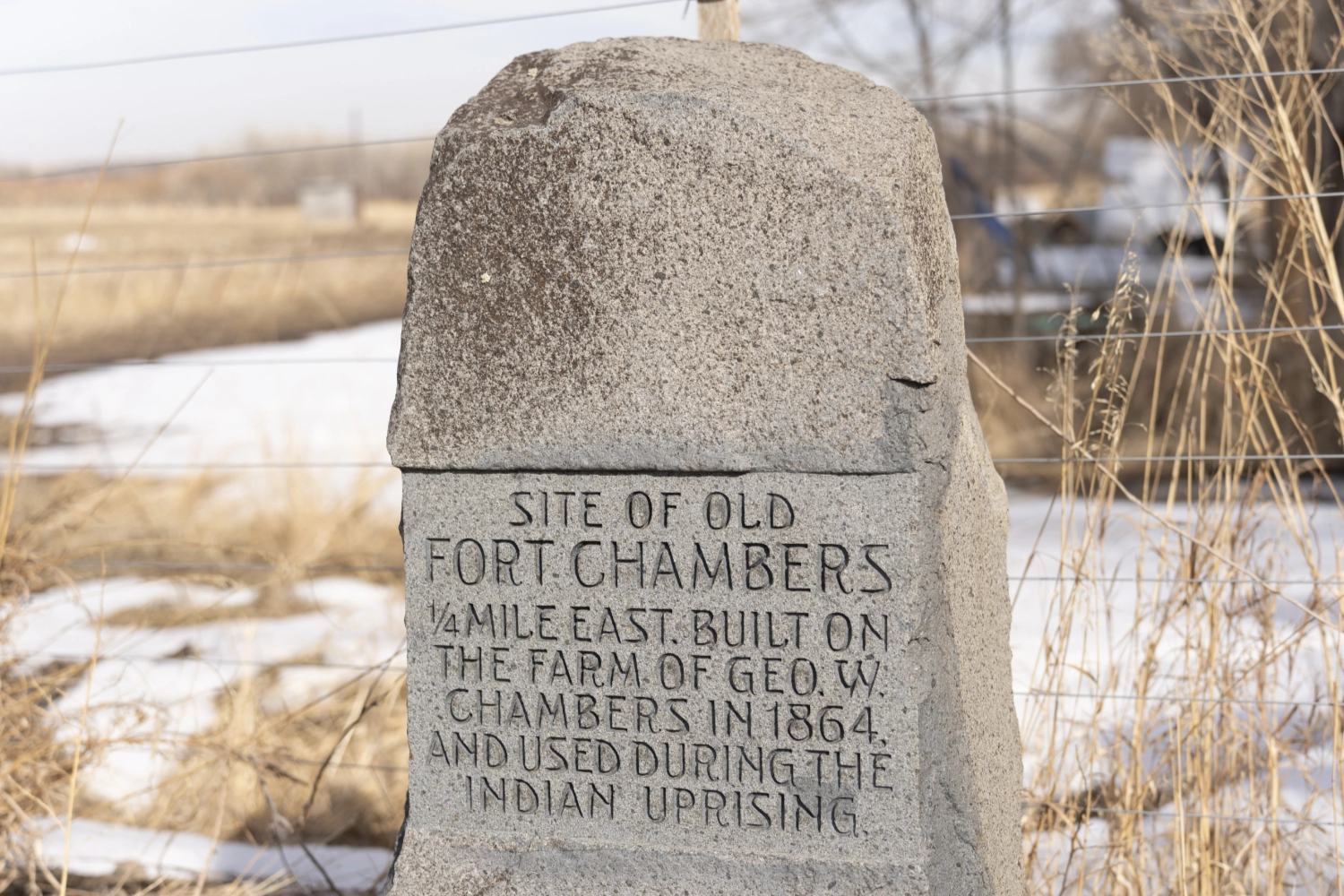
A key part of this broader public memory effort included communication infrastructure around the removal of an inaccurate 1959 Fort Chambers plaque.
The marker was not just a sign. It was a public history object that carried an inaccurate and incomplete version of the past.
Communicating its removal required careful framing, historical context, internal coordination, leadership communication, public-facing explanation, and sensitivity to the deeper history connecting Fort Chambers, Boulder County, Arapaho and Cheyenne history, and the Sand Creek Massacre.
This work reflects a core CenterSignal capability: helping organizations correct incomplete public memory with care, context, and trust.
Correcting public memory is not only a historical task. It also requires communication, leadership, relationship-building, and public accountability.
Media Work
Media releases in March 2024, July 2024, and March 2025 supported public comment, completion of the stewardship plan, and community ideas for a proposed healing trail.
Key landing webpages, including a project page and historical overview grounded in research and reviewed by Tribal Representatives, were supported by city e-newsletters, Nextdoor, Facebook, X, Instagram, and LinkedIn.
The work generated sustained local and regional media coverage, including coverage by the Daily Camera, Boulder Reporting Lab, Left Hand Valley Courier, Denver7/KMGH-TV, CBS Colorado/KCNC-TV, and 9NEWS/KUSA-TV.
This was not abstract media strategy. Phillip helped prepare public materials, supported media interviews, and was publicly quoted as a city communicator explaining Sand Creek-related public memory work. He also worked to include Tribal Elder and Tribal Representative perspectives in city media releases and public communication connected to Sand Creek, Fort Chambers, and land stewardship.
Tribal Representative Perspectives
In the Colorado PRSA award nomination, Chester Whiteman, a Southern Cheyenne Representative for the Cheyenne and Arapaho Tribes, emphasized that shared history calls for Native and non-Native communities to come together, tell their stories, recognize each other's perspectives, and speak truthfully about the past.
He said this helps create space for healing.
He also noted that no other city had reached out like Boulder had to hear and honor Tribal Representative perspectives, and that the city's efforts had built lines of communication that could support accurate, meaningful histories in the years to come.
Fred Mosqueda, a designated Sand Creek Representative and Southern Arapaho Elder who collaborated in media interviews in 2024 and 2025, also supported the award nomination.
He emphasized that Boulder's work with Tribal Representatives helped both settler and Tribal histories come to light, creating a fuller history rather than one that glorified one side or hid atrocity.
Outcomes
The work helped elevate Tribal Representative voices in public communication, correct incomplete local narratives, and build public understanding of Boulder's connection to the Sand Creek Massacre.
It generated sustained local and regional media coverage and supported public input on a collaborative land stewardship concept plan for the Fort Chambers/Poor Farm property.
It also deepened communication lines between the City of Boulder and Cheyenne and Arapaho Tribal Representatives.
The project demonstrates how truthful historical storytelling, leadership communication, public memory work, and relationship-aware media strategy can support more honest public understanding and create space for longer-term relationship-building.
Related
Start With The Place
Have a project, public story, or community process shaped by land, memory, history, or relationships?
CenterSignal can help you understand what the place carries, prepare the people leading the work, and communicate meaningful history with care, clarity, and responsibility.