
The Peoples’ Crossing: Renaming, Public Memory, and Place-Based Communication
While employed by the City of Boulder Open Space and Mountain Parks Department, Phillip Yates helped support consultation coordination and public communication connected to the renaming of Settler’s Park to The Peoples’ Crossing.
Case Study: At A Glance
What This Work Demonstrates
Naming and renaming communication, public memory, Tribal consultation support, civic decision-making, interpretation, and place-based public communication.
- Challenge
- The name “Settler’s Park” centered settler history while obscuring the deeper significance of a place connected to Chief Nowoo3 and to Arapaho and Cheyenne relationships with Boulder Valley.
- Role
- As a City of Boulder Open Space and Mountain Parks communication staff member, Phillip Yates helped support consultation coordination, public explanation, and communication materials for the renaming process.
- Work
- Consultation-support communication, public messaging, media coordination, community engagement support, and rollout materials connected to the new name.
- Outcome
- The renaming of Settler’s Park to The Peoples’ Crossing, continued City-Tribal relationships, public press coverage, and a place name that better reflects Arapaho, Cheyenne, and Boulder Valley history.
Role note: This work was conducted while Phillip Yates was employed by the City of Boulder Open Space and Mountain Parks Department. CenterSignal did not perform this work as an outside consultant. This case study does not speak for Tribal Nations, Tribal governments, Tribal Representatives, Elders, Native communities, or Native-led experts.
In Brief
The name The Peoples’ Crossing emerged through consultation with Representatives from federally recognized American Indian Tribal Nations. It reflects the area’s significance as a crossroads for Indigenous Peoples who have traveled through and lived in the Boulder area since time immemorial.
The site is central to Boulder’s origin story. In October 1858, Arapaho Chief Nowoo3 and other Arapaho people told gold seekers camped in what is now Boulder that they could not remain on Indigenous land as defined by the 1851 Treaty of Fort Laramie.
The work also included public communication around the removal of outdated interpretive signs in March 2023, when Tribal Representatives and city staff removed signs as part of ongoing efforts to update education and interpretation on city-managed open space lands.
This case study shows history-first placemaking in practice: listening early, supporting consultation-related communication, explaining why a name matters, correcting incomplete public understanding, and helping people see a familiar place with deeper context.
Why This Place Matters
The Peoples’ Crossing is one of Boulder’s most important public-memory sites.
In October 1858, Hinono’ei neecee, or Arapaho Chief Nowoo3 — also known as Niwot or Left Hand — and other Hinono’eino’, or Arapaho people, told a party of gold seekers camped in what is now Boulder that they could not remain on Indigenous land as defined by the 1851 Treaty of Fort Laramie.
That moment places The Peoples’ Crossing at the center of Boulder’s origin story. It connects the site to Indigenous sovereignty, Arapaho presence, treaty-defined land, the arrival of gold seekers, and the early conflict over who had the right to remain in Boulder Valley.
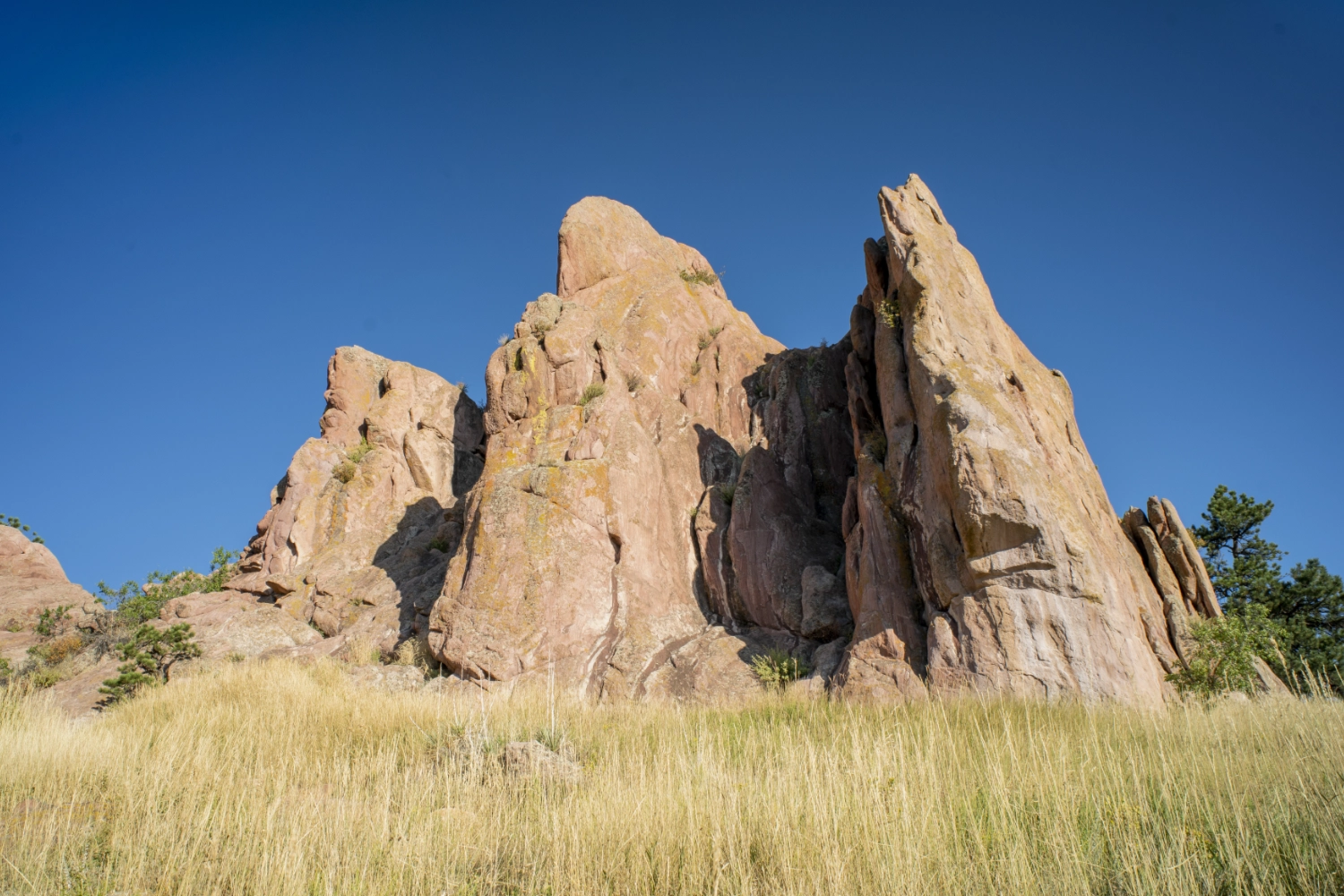
For public communication, that context matters. The place is not only a scenic open space area below the Red Rocks formation. It is a place where Indigenous history, settler arrival, treaty history, public memory, and present-day civic responsibility meet.
Project Context
The Peoples’ Crossing grew from the City of Boulder’s Indigenous Peoples Day Resolution, which directed the city to seek input from Tribal Nations for a name commemorating Indigenous presence on the parkland then known as Settler’s Park.
The resolution also directed the city to continue work to correct omissions of Native American presence in public places, resources, and cultural programming.
That direction created a clear communication challenge: how should a city rename and reinterpret a visible public place in a way that honored Tribal Representative guidance, corrected incomplete public understanding, and helped community members understand why the change mattered?
Communication And Consultation Support
The renaming process required more than a new name. It required consultation support, public-facing explanation, internal coordination, leadership preparation, and educational framing.
Phillip Yates helped support the communication work while employed by the City of Boulder.
That work helped explain why the name was changing, where the name came from, how Tribal Representatives shaped the recommendation, what the place meant in Indigenous history, how the renaming connected to the city’s Indigenous Peoples Day Resolution, and why future interpretation and education needed to include Indigenous perspectives that had long been omitted.
Public Leadership And Council Support
According to the Daily Camera, Boulder City Council signaled unanimous support for renaming Settler’s Park to The Peoples’ Crossing by choosing not to call the proposal up for a public hearing.
"We took the slow road on this … renaming, but I think it was the right road. We've ended up with a process and a name that our community can be proud of." — Councilmember Aaron Brockett
"It is such a pleasure and honor to finally be at this point. It's been a really thoughtful process." — Councilmember Mary Young
"The wisdom that they bring to the deliberations is … something to behold. It's caused me to think deeply about what leadership means and what community means." — Mayor Sam Weaver
Those comments show why naming work is also leadership work. Public leaders need context, language, and a clear explanation of why a place-name change matters.
Public Explanation Of Historical Gaps
The Daily Camera article also captured a central communication challenge in the renaming process: Boulder had significant "land history" for the area, but that history had largely been shaped by Euro-American source material.
As Boulder Open Space and Mountain Parks spokesperson, Phillip Yates explained the issue directly:
"We recognize that our history for the location is primarily informed by Euro-American source material and does not include Indigenous perspectives."
That statement reflects a core part of CenterSignal’s current practice. History-first communication often begins by asking what has been left out, whose sources shaped the official story, and what people need to understand before a place-based decision can be explained responsibly.
Explaining The Name
The Daily Camera article also documented how Yates explained the meaning of The Peoples’ Crossing to City Council.
The name reflected the area as a crossroads for Indigenous Peoples who had lived in and traveled through the Boulder area since time immemorial. It also reflected that "The People" or "Our People" are English translations for how many Native American Tribes refer to themselves in their own languages.
"The usage of the term 'the people' was meant to be inclusive of all people who have traveled through and have lived in the Boulder area." — Phillip Yates
A strong place name can help the public understand history, Indigenous presence, memory, and relationships connected to the land.
Renaming Process
The renaming process moved through several stages of city direction, consultation, working group discussion, and public decision-making.
2016 · Indigenous Peoples Day Resolution The City of Boulder adopted its Indigenous Peoples Day Resolution in 2016. The resolution directed the city to work with Native Americans and historians to correct omissions of Native American presence in public places, resources, and cultural programming. It also requested input from Tribal Representatives regarding a name that would commemorate Indigenous presence on the parkland known as Settler’s Park.
2019 · City-Tribal consultation During a March 2019 consultation, city staff shared information about the Indigenous Peoples Day Resolution. Tribal Representatives from more than a dozen Tribal Nations visited the area with city staff, elected officials, and community leaders. After the field trip, city staff presented documented community name suggestions to Tribal Representatives, with one idea generating broad support.
2019 · City-Tribal working group Following the 2019 consultation, city staff convened a City-Tribal working group that met several times to discuss updates to agreements between the city and Tribal Nations.
2021 · Consultation and final name In April 2021, city staff and Tribal Representatives met to finalize a new name for Settler’s Park. Those conversations ultimately led to the name The Peoples’ Crossing.
June 2021 · City Council Council members approved the renaming by not calling up the city renaming application for a public hearing.
Consultation-Guided Signage Removal And New Interpretation
The renaming of The Peoples’ Crossing was not the end of the work.
As part of ongoing City-Tribal Nation collaboration, Tribal Representatives continued to guide the city on how public education and interpretation should evolve in the area.
In February 2023, city staff received guidance from Tribal Representatives to remove existing interpretive signs and replace them with new Indigenous interpretation and education as part of the city’s work to include Indigenous perspectives in shared public histories.
In March 2023, Tribal Representatives, Comanche and Lakota children, city staff, and consultants visited The Peoples’ Crossing during a consultation. Tribal Representatives and city staff collaboratively removed the signs from the land.
The Peoples’ Crossing shows how consultation guidance can move from policy and naming into physical interpretation, public education, and visible changes on the land.
What This Case Study Demonstrates
The Peoples’ Crossing demonstrates CenterSignal’s history-first approach to placemaking, naming, consultation-support communication, leadership preparation, and interpretation.
It shows how organizations can:
- Listen to Tribal Representative guidance before communicating publicly.
- Explain why a place name matters.
- Recognize whose perspectives were missing from earlier histories.
- Translate consultation guidance into public understanding.
- Prepare leaders to speak about place, memory, and responsibility with care.
- Communicate visible changes on the land, including signage and interpretation.
- Move from symbolic recognition toward practical public memory correction.
- Help people understand why a familiar place carries deeper history.
Related
Start With The Place
Have a project, public story, or community process shaped by land, memory, history, or relationships?
CenterSignal can help you understand what the place carries, prepare the people leading the work, and communicate meaningful history with care, clarity, and responsibility.