
Building Arapaho, Cheyenne, and Niwot Relationships
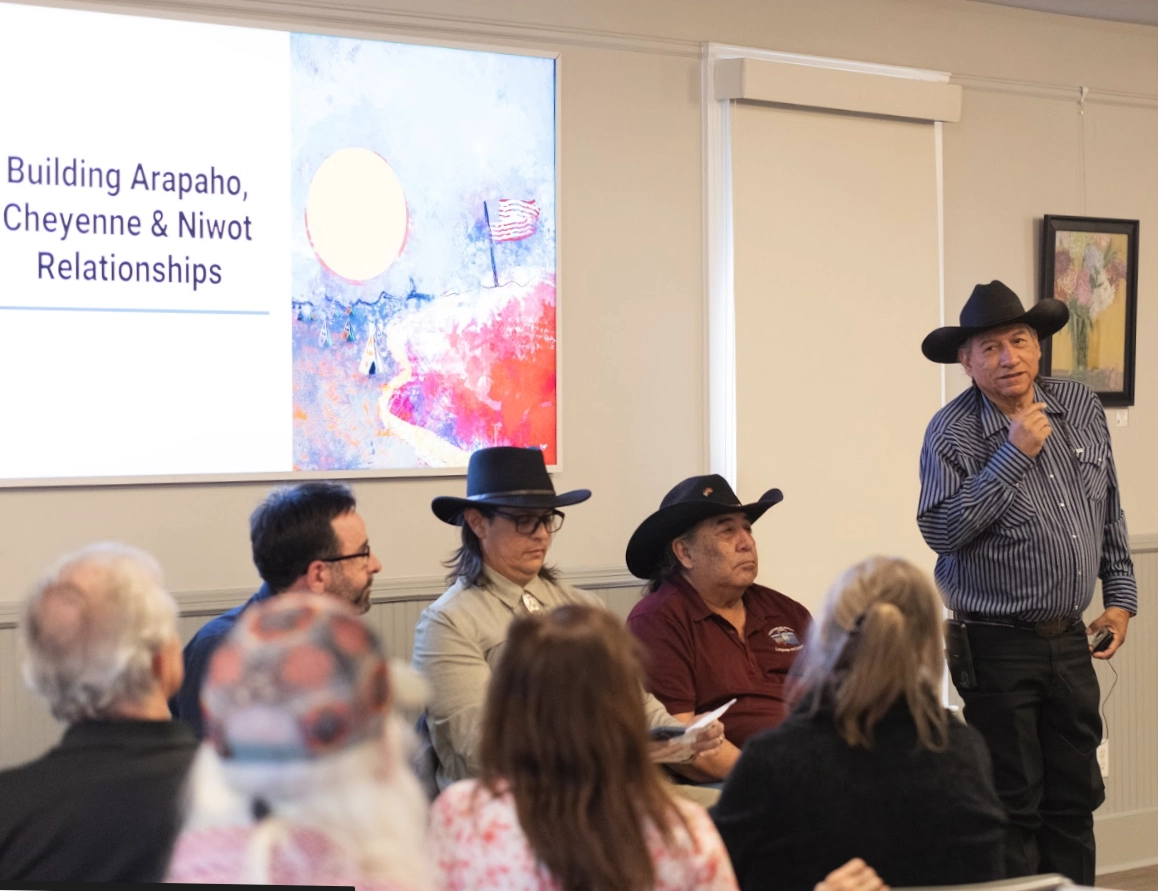
As Niwot commemorated its 150th anniversary in March 2025, Phillip Yates and other community members helped welcome Southern Arapaho Elder Fred Mosqueda and Southern Cheyenne Elder Chester Whiteman for an inaugural gathering focused on history, respect, and future relationships.
Case Study: At A Glance
What This Work Demonstrates
Community relationship-building, Elder-centered public programming, public history, place-based storytelling, civic education, and respectful community communication.
- Challenge
- Niwot’s 150th anniversary could have centered settler history while giving too little attention to Southern Arapaho Chief Nowoo3 — the town’s namesake — and the Tribal Nations whose histories shape the place.
- Role
- As a Niwot Cultural Arts Association board member, Phillip Yates helped welcome Southern Arapaho Elder Fred Mosqueda and Southern Cheyenne Elder Chester Whiteman and support coordination with the Niwot community.
- Work
- Community coordination, public messaging, event planning, video documentation, hospitality logistics, and follow-through to support the Elders, attendees, and continued relationship-building.
- Outcome
- An inaugural community gathering, new Arapaho–Cheyenne–Niwot connections, video conversations preserved on NiwotLivingHistory.org, and local press recognizing the work.
Role note: This was community relationship-building work supported by Phillip Yates and Niwot community partners. It should not be framed as client work or as CenterSignal, Phillip Yates, or the Niwot community speaking for Tribal Nations, Elders, Native communities, or Native artists.
Why This Matters For CenterSignal Clients
This case study shows how public history can move beyond commemoration into relationship-building. For communities, public agencies, cultural organizations, and civic partners, the work demonstrates how careful preparation, hospitality, public dialogue, video documentation, art, and place-based learning can help people begin telling more truthful stories together.
In Brief
As Niwot commemorated its 150th anniversary in March 2025, Phillip Yates and other community members helped welcome Southern Arapaho Elder Fred Mosqueda and Southern Cheyenne Elder Chester Whiteman for an inaugural gathering about history, respect, and future relationships.
The gathering helped the community learn more about Niwot’s connection to the Sand Creek Massacre, honor Southern Arapaho Chief Nowoo3 — also known as Chief Niwot or Left Hand — and think beyond symbolic acknowledgment. It included community dialogue, video documentation, Native art, public murals, tree carvings, and land-based learning, including a hike at Haystack Mountain.
Case Study
As Niwot commemorated its 150th anniversary in March 2025, Phillip Yates and other community members helped welcome Southern Arapaho Elder Fred Mosqueda and Southern Cheyenne Elder Chester Whiteman for an inaugural gathering about Arapaho, Cheyenne, and Niwot relationships.
The gathering centered on a simple idea: truthful history can help communities build better relationships.
The event invited the community to learn more about Niwot’s connection to the Sand Creek Massacre, honor Southern Arapaho Chief Nowoo3 — also known as Chief Niwot or Left Hand — and consider what relationship-building with Arapaho and Cheyenne people could look like in the years ahead.
Phillip Yates is grateful to Mr. Mosqueda and Mr. Whiteman for sharing their perspectives, guidance, humor, honesty, and hopes for future relationship-building.
A next community dialogue is tentatively planned for January 2027, during the same month Boulder hosts the Sundance Film Festival.
Project Focus
The gathering focused on three goals:
- Welcoming Mr. Fred Mosqueda, Southern Arapaho Elder and Sand Creek Massacre Representative, and Mr. Chester Whiteman, Southern Cheyenne Elder and Sand Creek Massacre Representative.
- Looking toward future relationships between Niwot, Boulder, and the Cheyenne and Arapaho Tribes.
- Honoring Southern Arapaho Chief Nowoo3, also known as Chief Niwot or Left Hand, the community’s namesake.
Key Guidance From The Gathering
Mr. Mosqueda and Mr. Whiteman offered Niwot a practical path beyond land acknowledgments.
Their message was direct: sit together, learn the true history, show respect, ask what can be done together, and build relationships through action rather than symbolism.
Elder Guidance
"First of all, we need to sit down at a table and talk… Not just talk about it, not just dream about it, but to actually make it happen." — Chester Whiteman
"We don't want to come and demand anything of you. We want to come and say, 'What can we do together?' And that's what we want." — Fred Mosqueda
"We try to bring our Nation and the non-Native nation to an understanding where we can get along, work together, and move forward in this day and age." — Chester Whiteman
"Once they get to know who he [Nowoo3] was, then they will begin to know who the Arapaho People were and who we are today." — Fred Mosqueda
"I was always told to get respect, you have to give it… There's still a lot of open wounds out there, so we need to show respect to one another and move forward, hand in hand." — Chester Whiteman
Videos And Public Education
The event was documented through video conversations with Southern Arapaho Elder Fred Mosqueda and Southern Cheyenne Elder Chester Whiteman.
The videos extend the gathering beyond a single evening and create a public education resource for community members, schools, civic leaders, cultural organizations, and future relationship-building efforts.
Before The Event: Walking The Land Together
Before taking the stage, Mr. Mosqueda and Mr. Whiteman visited places connected to Niwot’s public art, Native art, and land-based memory.
They toured Native murals and wood carvings in Cottonwood Square and hiked Haystack Mountain, recently purchased by Boulder County Parks and Open Space.
For those who participated, the hike offered deeply meaningful moments.
It marked the first time an Arapaho Elder had returned to this important site in 166 years. The moment was honored by the sight of an elk herd walking through the valley below.
This land-based experience reflected one of CenterSignal’s core beliefs: public understanding deepens when people encounter history, memory, and place together.
Native Art, Public Memory, And Place
The gathering was also shaped by Native art and local cultural storytelling.
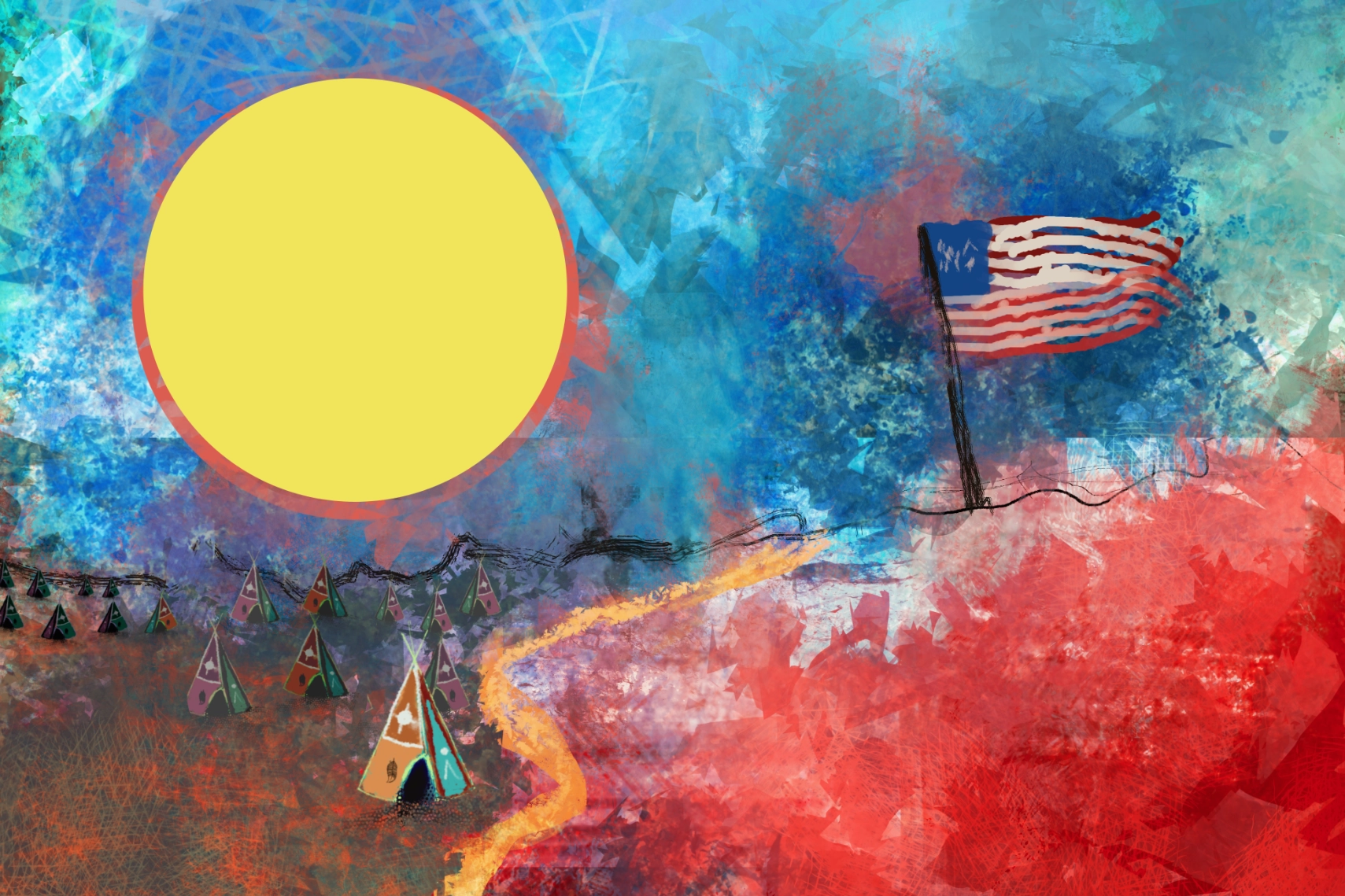
Local Native artist Tom Myer provided strategic vision and planning support. He also moderated the community dialogue and shared his artwork, Encroachment, as the event’s central visual metaphor.
Encroachment reflects the historical realities of white colonization in Colorado and the continuing legacy of the 1864 Sand Creek Massacre.
The event also connected participants to Native murals, tree carvings, and public art in Niwot, including work by Eddie Running Wolf, Dustin Wolf, Danielle SeeWalker, and Tom Myer.
Together, the art, history, land, and dialogue helped the community better understand the place it was gathering in and the histories it carries.
Path To The Gathering
Initial efforts to build relationships between Niwot and the Cheyenne and Arapaho Tribes grew out of collaboration among Fred Mosqueda, Chester Whiteman, Phillip Yates, and other partners.
This broader relationship-building work connected with several regional efforts, including the City of Boulder’s Tribal Ethnographic Education Report, the renaming of Settlers’ Park to The Peoples’ Crossing, community events with Tribal Elders, and communication about Fort Chambers shaped by Tribal Representative perspectives.
What This Case Study Demonstrates
This case study shows how communities can use history, art, public dialogue, and hospitality to begin building more meaningful relationships.
It shows how communities can:
- Move beyond symbolic acknowledgment.
- Create space for Tribal Representative and Elder perspectives.
- Use truthful history to support future relationships.
- Connect memory to place, art, land, and community identity.
- Build public understanding through video, dialogue, and accessible education.
- Prepare communities to ask what can be done together.
- Honor a place name by learning more about the people and history behind it.
- Use cultural programming to create meaningful public connection.
Related
Start With The Place
Have a project, public story, or community process shaped by land, memory, history, or relationships?
CenterSignal can help you understand what the place carries, prepare the people leading the work, and communicate meaningful history with care, clarity, and responsibility.