
Boulder City-Tribal Consultation, Public Memory, and History-Informed Placemaking
A case study of Phillip Yates’s City of Boulder Open Space and Mountain Parks work supporting Tribal consultation communication, public memory work, The Peoples’ Crossing, Fort Chambers, and public education connected to the Sand Creek Massacre.
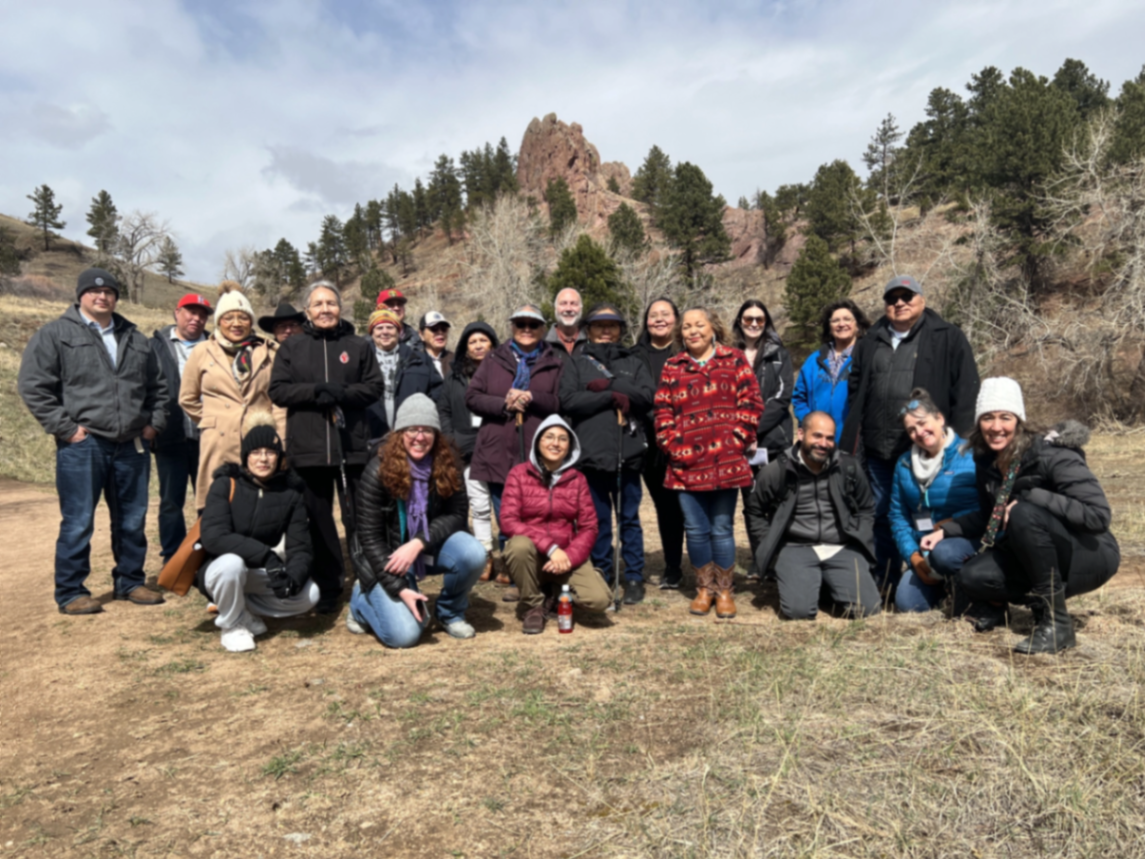
Case Study: At A Glance
What This Work Demonstrates
Tribal consultation communication support, public memory, place-based storytelling, public land communication, internal coordination, and long-term relationship-building.
- Challenge
- Municipal public land history in Boulder was incomplete in highly visible places — public names, signs, and local narratives often centered settler history while leaving out Indigenous presence, treaty history, Arapaho and Cheyenne relationships with Boulder Valley, Fort Chambers, and Boulder’s connection to the Sand Creek Massacre. The challenge was a public memory problem: familiar places were being understood without the deeper histories and relationships they carried.
- Role
- As a City of Boulder Open Space and Mountain Parks communication staff member, Phillip Yates helped support consultation coordination, public communication, research, media materials, public education content, and internal communication connected to these efforts.
- Work
- Source-based historical research, consultation-support communication, public messaging, media coordination, planning documents, public education materials, leadership communication, and follow-through for a multi-year City-Tribal collaboration.
- Outcome
- Clearer public storytelling about The Peoples’ Crossing, Fort Chambers, and Sand Creek; public communication around the removal of outdated or inaccurate signs and markers; a collaborative land stewardship plan at the Fort Chambers/Poor Farm property; media coverage that included Tribal Representative perspectives; and a 2024 American Cultural Resources Association national award.
Role note: This work was conducted while Phillip Yates was employed by the City of Boulder Open Space and Mountain Parks Department. CenterSignal did not perform this work as an outside consultant, and this case study does not speak for Tribal Nations, Tribal governments, Elders, Native communities, or Native-led experts.
In Brief
While employed by the City of Boulder Open Space and Mountain Parks Department, Phillip Yates helped support communication, coordination, research, public messaging, media work, and internal materials connected to City-Tribal consultation and public memory efforts.
The work connected several related initiatives: the renaming of Settler’s Park to The Peoples’ Crossing, public education around Fort Chambers and Boulder’s connection to the Sand Creek Massacre, land acknowledgment support, consultation-support materials, media communication, and long-term relationship-building with Cheyenne and Arapaho Tribal Representatives.
At its center, the work showed that history is not only something an organization explains after a decision is made. History can shape the relationship itself. When Tribal perspectives, historical records, public communication, and community responsibility are brought together, familiar public places can be understood differently.
This case study looks at broader City-Tribal consultation and public memory work across multiple Boulder open space initiatives. For a deeper look at Fort Chambers and Boulder’s connection to the Sand Creek Massacre, see the Fort Chambers case study.
Project Context
Public land carries more than scenery, access, and management decisions. It carries history, memory, relationships, responsibility, and unresolved public meaning.
Boulder Valley has deep connections for Arapaho, Cheyenne, Ute, and other Indigenous Peoples. Those histories include treaty-defined land, the arrival of gold seekers, the displacement of Native peoples, and the forced removal of Arapaho and Cheyenne people from Colorado.
Chief Nowoo3, also known as Niwot or Left Hand, is central to this story. His history connects Boulder Valley, The Peoples’ Crossing, the Sand Creek Massacre, and the broader public memory of the region.
Fort Chambers is also central. Boulder-area men trained and mobilized there before participating in the Sand Creek Massacre on Nov. 29, 1864, where peaceful Cheyenne and Arapaho people were killed and Chief Nowoo3 was mortally wounded.
For decades, many of these histories were excluded, softened, or inaccurately framed in local public memory. The work required Boulder to explain not only what happened, but why earlier public stories had been incomplete.
Core Idea: History As Relationship
This work was not only about producing better historical content.
It was about changing the relationship between the city and Tribal Representatives, between public places and their histories, between staff and the responsibilities they inherited, and between community members and the land they use, visit, and care about.
That is where history-informed placemaking begins. It is not decoration. It is not simply a name, sign, brand, or interpretive panel. It is the work of understanding what a place carries before public communication, engagement, stewardship planning, naming, or interpretation moves forward.
Project Approach
The approach was practical and relationship-aware.
It combined historical analysis of public records and local narratives with communication support for City-Tribal consultation processes. It also required reviewing histories that had long excluded Native and Indigenous perspectives and helping translate research, Tribal Representative guidance, and staff knowledge into public-facing materials.
Phillip Yates helped coordinate with staff, leadership, and project teams; draft and refine public language; prepare materials for leaders and media; and support public education content grounded in research and reviewed by Tribal Representatives where appropriate.
The work was also built under real public-sector constraints. It required steady use of city webpages, media releases, e-newsletters, social media, public updates, and earned media rather than a large campaign budget.
Communication Focus
The communication work focused on helping the public understand histories that had been incomplete, softened, or left out.
That included explaining why the name “Settler’s Park” no longer reflected the deeper history of the place and why The Peoples’ Crossing better recognized Indigenous presence and the area’s significance as a crossroads.
It also included explaining Fort Chambers and its connection to the Sand Creek Massacre, communicating that much of Boulder’s existing “land history” had been shaped by Euro-American source material, and helping the public understand that names, signs, markers, trails, and stewardship plans all carry meaning.
The work was careful but direct. It did not treat history as background information. It treated history as something the public needed in order to understand why a place, decision, or change mattered.
Physical Places And Public Memory
The work became tangible through specific places, names, signs, and public objects.
The Peoples’ Crossing
The renaming of Settler’s Park to The Peoples’ Crossing became one of the clearest examples of history-first placemaking.
The old name centered settler history. The new name emerged through consultation with Tribal Representatives and reflected the area’s significance as a crossroads for Indigenous Peoples who had lived in and traveled through the Boulder area since time immemorial.
The renaming required more than a council action. It required consultation support, public explanation, leadership communication, and a clearer account of why the place mattered.
Fort Chambers And The 1959 Plaque
Fort Chambers showed that public memory is physical.
The site and its historic marker carried an incomplete and inaccurate version of Boulder’s connection to Sand Creek. Communicating the removal of the outdated 1959 plaque required historical context, internal coordination, leadership language, public-facing explanation, and sensitivity to the painful history connecting Fort Chambers to the massacre.
Correcting public memory is a historical task. It is also a communication task, a leadership task, a relationship task, and a public responsibility.
Media Work
Media strategy was a central part of the process. It helped move the story beyond internal planning documents and into broader public understanding.
The effort relied on earned, owned, and shared media to support public input, community updates, and long-term collaboration. Media pushes in March 2024, July 2024, and March 2025 supported public comment, completion of the Fort Chambers/Poor Farm stewardship plan, and community ideas for future interpretation.
Coverage included local and regional outlets such as the Daily Camera, Boulder Reporting Lab, Left Hand Valley Courier, Denver7/KMGH-TV, CBS Colorado/KCNC-TV, and 9NEWS/KUSA-TV.
Phillip Yates helped prepare public materials, supported media interviews, and was publicly quoted as a city spokesperson explaining the public memory work. He also helped structure city communication so Tribal Elder and Tribal Representative perspectives were included directly in public materials and media coverage.
Tribal Representative Perspectives
The guidance of Tribal Representatives and Elders was the foundation of the work.
Southern Cheyenne Representative Chester Whiteman emphasized that truthful shared history can help Native and non-Native communities come together, tell their stories, recognize one another’s perspectives, and create space for healing. He also observed that Boulder’s work stood out because the city listened, honored Tribal perspectives, and helped build lines of communication that could support more accurate histories in the years ahead.
Southern Arapaho Elder and Sand Creek Representative Fred Mosqueda emphasized that Boulder’s work with Tribal Representatives helped bring both Tribal and settler histories into public view. That fuller history did not glorify one side or hide atrocity. It helped the public see more of what happened and why it still matters.
These perspectives are included here as evidence of guidance, relationship, and responsibility. They should not be treated as branding language or as a substitute for Tribal authority.
What This Case Study Demonstrates
This case study demonstrates how organizations can:
- Begin with history before public communication or decision-making.
- Treat place as a living cultural landscape, not an empty public asset.
- Support consultation with clear communication, documentation, and follow-through.
- Prepare leaders to explain historically sensitive work with care.
- Use media to build public understanding rather than simply generate attention.
- Elevate long-excluded perspectives without claiming authority over them.
- Connect land stewardship to relationship-building.
- Move from symbolic acknowledgment toward practical public responsibility.
- Preserve institutional memory across long processes.
- Help communities understand why familiar places may need new names, new signs, new stories, or new forms of care.
Outcomes And Institutional Legacy
The work helped build better public understanding of Boulder’s connection to Sand Creek, stronger public explanation of The Peoples’ Crossing, and more careful communication around Fort Chambers.
It supported public education and media coverage that included Tribal Representative perspectives. It contributed to a collaborative land stewardship plan at the Fort Chambers/Poor Farm property. It also helped create communication structures and public materials that could support continued City-Tribal relationship work.
In 2024, the City of Boulder received a national American Cultural Resources Association award for consultation and engagement efforts connected to this work, with support from Tribal Representatives.
The work did not solve historical harm or complete the relationship. That is not how this work functions.
What it did was help create space for more honest public understanding, more careful stewardship, and future relationship-building.
For CenterSignal, the lesson is clear: public land communication is not only about explaining access, rules, planning, or management decisions. In historically significant places, it also means helping people understand what the land carries.
That requires history before messaging, relationship before rollout, and context before public interpretation.
Before The Public Story, Understand The Place
If your organization is preparing communication, engagement, naming, signage, or stewardship work in a place with deep history, CenterSignal can help you start with the context that public storytelling needs.