
Skip to content
Tribal EngagementPublic MemoryCommunity Relationship-Building

Principles for Meaningful Tribal Engagement

Lessons for communities moving beyond acknowledgment — practical principles drawn from public service, municipal communication, Tribal consultation coordination, and community relationship-building in Boulder County and Niwot, Colorado.

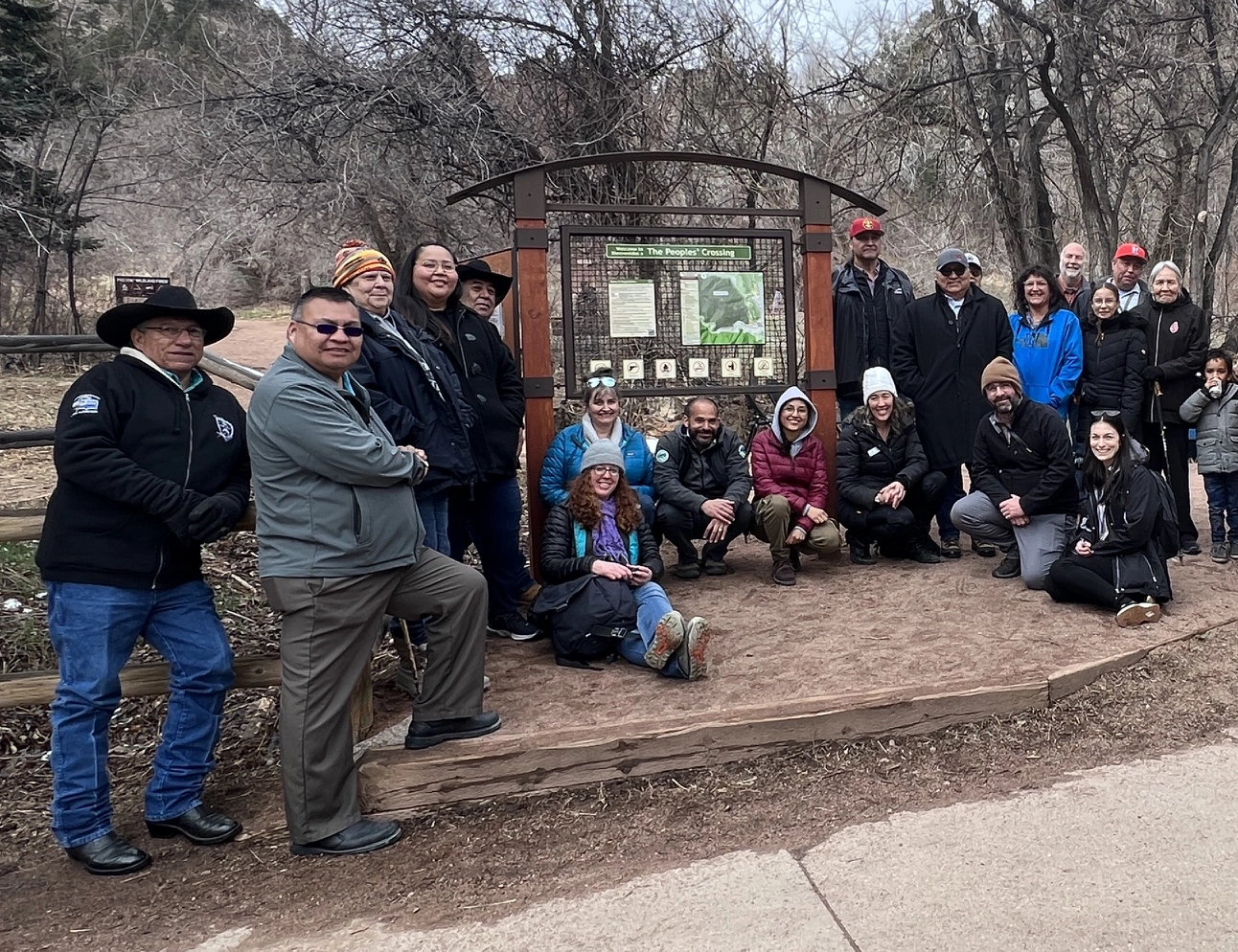
Tribal Representatives and City of Boulder Open Space and Mountain Parks staff gathered at The Peoples' Crossing during a 2023 consultation visit.

Article Snapshot

Subject
Principles for meaningful Tribal engagement in local communities.
Author
Phillip Yates, drawing on public service, municipal communication, and community relationship-building in Boulder County and Niwot, Colorado.
Audience
Municipalities, nonprofits, cultural organizations, schools, planners, landowners, and community leaders.
Companion To
Boulder Tribal Consultation and History-Informed Placemaking case study.

I did not begin Tribal engagement work by claiming expertise. I began by listening, learning, asking better questions, accepting correction, and paying attention to the responsibilities that emerged through public service, municipal communication, Tribal engagement support, and community relationship-building.

That experience changed how I understand communication, history, land, memory, and trust.

The most important lesson is simple: meaningful engagement is not a final communication step after decisions have already been made. It is a relationship practice. It requires humility, time, respect, institutional memory, and a willingness to let Native knowledge, concerns, corrections, and priorities shape the work itself.

These principles come from my experience in public service, municipal communication, Tribal consultation coordination, public land communication, and community relationship-building in Boulder County and Niwot, Colorado.

They are not a substitute for formal Tribal consultation, legal guidance, Native-led expertise, or the authority of sovereign Tribal Nations.

They are offered as practical lessons for local communities and organizations that want to do better.

The Foundation: Inherent Sovereignty

The first lesson is to understand the legal, historical, and political reality of Tribal Nations.

Sovereignty for Native peoples is not a recent political development. It has existed since time immemorial and predates the United States and the U.S. Constitution.

Federally recognized American Indian and Alaska Native Tribal Nations are sovereign governments with a distinct legal and political status. The powers Tribal Nations possess are not simply delegated by the United States. They arise from their historic status as self-governing peoples and nations.

That is why federal Tribal consultation is not ordinary stakeholder engagement. It is conducted on a government-to-government basis because it recognizes Tribal sovereignty and the political relationship between sovereign governments.

The U.S. Constitution reflects this distinct status in the Commerce Clause, which gives Congress authority to regulate commerce “with foreign Nations, and among the several States, and with the Indian Tribes.”

For local communities, this foundation matters because it changes the posture of the work. Tribal Nations and Tribal Representatives should not be treated as just another audience, interest group, or public-comment category.

Why This Matters for Local Communities

Federal agencies have formal consultation responsibilities. State, local, nonprofit, and private entities may have different obligations depending on the project, funding source, permitting process, land status, and applicable law.

But even when a local community is not conducting formal government-to-government consultation, the principles behind consultation still matter.

Those principles can help guide municipalities, nonprofits, cultural organizations, schools, campuses, businesses, landowners, developers, conservation organizations, and community groups that want to build more respectful relationships with Native peoples.

Treating Tribal Nations and Tribal Representatives with respect is not only a legal question. It is a question of trust, history, humility, and long-term responsibility.

In Niwot, these principles help guide community-based relationship-building with Arapaho and Cheyenne Tribal Representatives.

This work does not replace formal consultation with sovereign Tribal Nations. Instead, it asks what local communities can learn from consultation practice:

  • Listen early.
  • Show respect.
  • Compensate expertise.
  • Protect sensitive knowledge.
  • Preserve institutional memory.
  • Build relationships before decisions are already made.
Ten Principles
Principle01

Lead With Humility

Approach this work with the understanding that learning is part of the responsibility.

I am deeply grateful to the Tribal Elders and Representatives whose guidance helped me understand what the work required, correct course when needed, and move shared work forward with greater care.

Humility does not mean passivity.

It means listening carefully, asking better questions, accepting correction, and staying committed to the relationship even when the work becomes uncomfortable.

Organizations often want the right words before they have done the deeper learning. Meaningful engagement begins when they accept that they do not already know everything the land, history, and relationships require of them.

Principle02

Come Together at the Same Table

Meaningful relationship-building means moving beyond separation and working toward mutual understanding.

During the March 2025 community gathering in Niwot, Southern Cheyenne Elder Chester Whiteman captured this responsibility:

“We want to sit at the same table and talk this thing through and make something positive happen for this valley… and cause it to really happen.”

Southern Arapaho Elder Fred Mosqueda emphasized the same principle:

“We can both be successful by using what each other can bring to the table. But let’s bring it to the table, and that’s where we can start.”

Their words offer a practical model for Niwot and other local communities:

  • Sit together.
  • Listen honestly.
  • Bring what each community can offer.
  • Turn conversation into action.
Principle03

Engage Early. Do Not Notify Late.

Tribal Representatives should be engaged at the beginning of an idea, not after plans have already been made.

Too often, institutions seek Tribal input only after a project is fully designed, a report is nearly finished, or a public decision is already moving forward.

That is not meaningful engagement.

It is notification.

Fred Mosqueda has cautioned against this kind of performative outreach, especially when agencies or communities claim they have consulted after decisions are already in place. In those situations, Tribal Representatives can be treated as tokens rather than partners.

Engagement starts early enough for Native knowledge, concerns, corrections, and priorities to shape the work itself.

Principle04

Go Beyond Legal Requirements

Consultation should not be treated only as a legal checklist.

At its best, consultation is an opportunity for collaboration, learning, repair, and relationship-building.

Even when formal consultation is not legally required, local communities can still choose to act with respect.

They can invite Tribal Representatives into conversations early, compensate their expertise, provide adequate time for review, and allow Native perspectives to shape public history, land stewardship, educational programming, interpretation, and community decisions.

Doing only what is legally required may satisfy a process.

It does not necessarily build trust.

Principle05

Protect Institutional Continuity and Share Knowledge

Losing institutional memory damages trust.

When staff, elected officials, board members, consultants, or volunteers change, Tribal Representatives should not have to restart the relationship from the beginning.

Communities need ways to preserve what has been learned, document commitments, and help new leaders understand the history, relationships, and responsibilities they are inheriting.

This can include formal agreements, shared records, internal briefings, staff education, transition documents, meeting notes, public history materials, and clear points of contact.

Relationship-building should not depend on one person’s memory or one leader’s interest.

It should become part of the institution’s culture.

Principle06

Prioritize Face-to-Face Dialogue

Email is not a relationship.

Written communication can support coordination, but it cannot replace sitting together, walking the land together, sharing meals, listening in person, and making time for conversation.

Many of the most meaningful moments in Niwot’s relationship-building work have happened face to face — during site visits, public talks, informal conversations, and shared time in places connected to Arapaho and Cheyenne history.

In-person engagement creates space for nuance, trust, emotion, humor, correction, and healing in ways passive outreach rarely can.

Principle07

Address Erasure and Protect Native Narratives

Local communities must be careful not to replace Indigenous history with romanticized settler myths.

Public history should not be built around Native names while excluding Native voices.

This matters in places like Niwot, Boulder, and the broader Front Range, where Native names remain visible across the landscape even as public understanding of Native peoples, histories, and ongoing relationships has often been incomplete.

To address that erasure, communities should create meaningful opportunities for Tribal Representatives to guide, review, correct, or author educational materials — with compensation and adequate review time where appropriate.

This also means correcting errors when they are identified and resisting the temptation to simplify complex histories into comfortable local legends.

Principle08

Respect Data Sovereignty and Protect Confidentiality

Some Indigenous knowledge should not be made public.

Communities and institutions need safeguards to protect sensitive cultural information, including information about sacred sites, burial areas, ceremonial knowledge, culturally significant landscapes, and traditional knowledge that Tribal Nations or Representatives do not want publicly disclosed.

Withholding this information is not secrecy.

It is cultural care.

It is also an expression of Tribal sovereignty and a recognition that not all knowledge belongs in public reports, websites, maps, archives, or open records systems.

Meaningful engagement requires asking what information can be shared, what should remain confidential, who has authority to decide, and how sensitive knowledge will be protected before it is collected.

Principle09

Value and Compensate Expertise

Communities must stop treating Tribal consultation and cultural guidance as unfunded labor.

Tribal Representatives, Elders, cultural experts, historians, language keepers, artists, and knowledge holders bring deep expertise.

That expertise deserves compensation.

Local governments and organizations routinely pay engineers, architects, consultants, facilitators, lawyers, and technical experts.

The same respect should be extended to Tribal expertise.

Compensation may include honoraria, consulting fees, travel reimbursement, lodging, meals, per diem, and support for the time required to review materials, attend meetings, prepare remarks, and consult with other Tribal leaders or Elders.

Respect is not only expressed through language.

It is also expressed through budgets.

Principle10

Make Time for Trust

Meaningful engagement moves at the speed of trust and consensus, not a rushed project calendar.

Tribal Representatives may need time to review complex documents, consult with Tribal leadership, speak with Elders, evaluate cultural concerns, and determine what can or cannot be shared.

Communities that are serious about relationship-building must adjust their timelines accordingly.

Rushed engagement often produces shallow results.

Adequate time allows for better understanding, better decisions, and stronger relationships.

Get in touch

Need Help Communicating Complex History With Greater Responsibility?

CenterSignal helps organizations understand what a place carries, prepare the people leading the work, and communicate with more context around public memory, Tribal engagement, land, and community-facing decisions.